Internet out of thin air

We’ve already talked about the “quantum internet” in several occasions. The Netherlands is making a huge effort in this field. But this new update comes from Barcelona (Spain). Nicolas Maring etal. (ICFO) has transferred quantum information between a solid crystal and a cloud of cold atomic gas. The result was published in Nature in November 2017.
The transference of qubits between nodes is of key importance in the construction of the so called “quantum internet”. This nodes can be made out of different types of matter so they can perform different functions. While we now know how to transfer information between similar systems, it was not straightforward how to do that using radically different matter configurations.

 

Cool, man!

[Sorry for the bad joke]

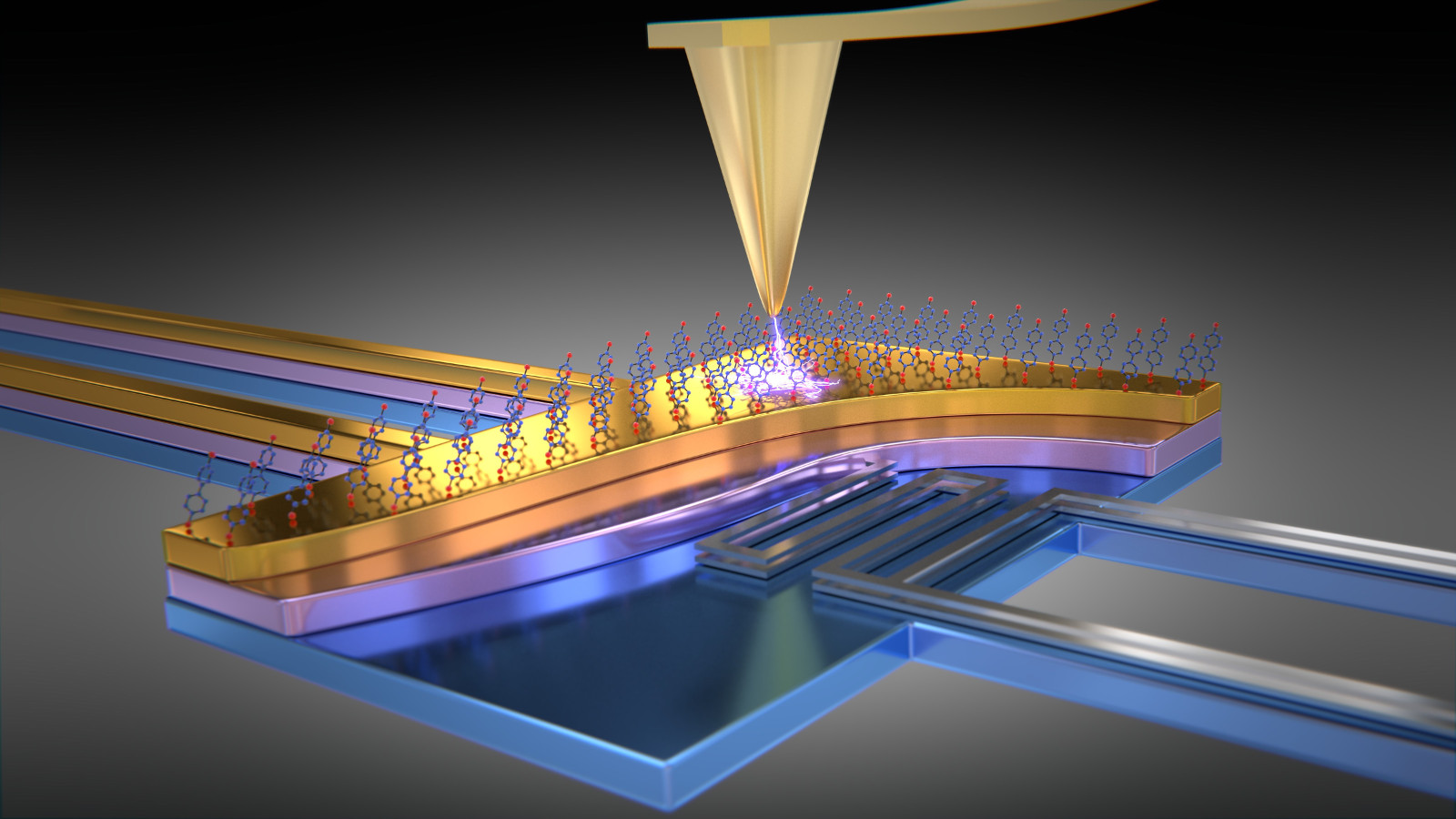
One of the issues of nanocircuits is heat dissipation. As in the macro world, at the nanoscale, it is imperative to find a way to cool circuits. Thanks to a collaboration between the University of Michigan and the Universidad Autónoma de Madrid, has been proved that a particular arrangement of molecules in nanocircuits, achieves and optimizes molecular termoelectric refrigeration.

This result has been published in Nature Nanotecnology.

Hammering viruses

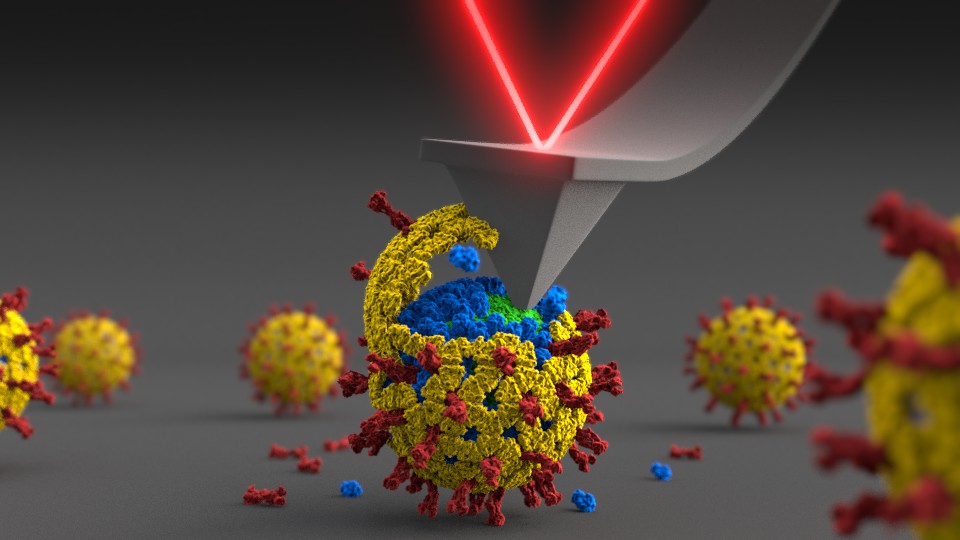
Prof. Pedro de Pablo (Nanoforces Lab) has been using atomic force microscopy to break viruses for a while. Apart from the obvious pleasure that breaking things produces, their main focus is to study the stability of viruses. Viruses infect cells by releasing their highly packed genetic material. So the understanding of the stability of the viruses capsides will offer new venues for the development of novel antiviral strategies [article].

Individual impurity atoms

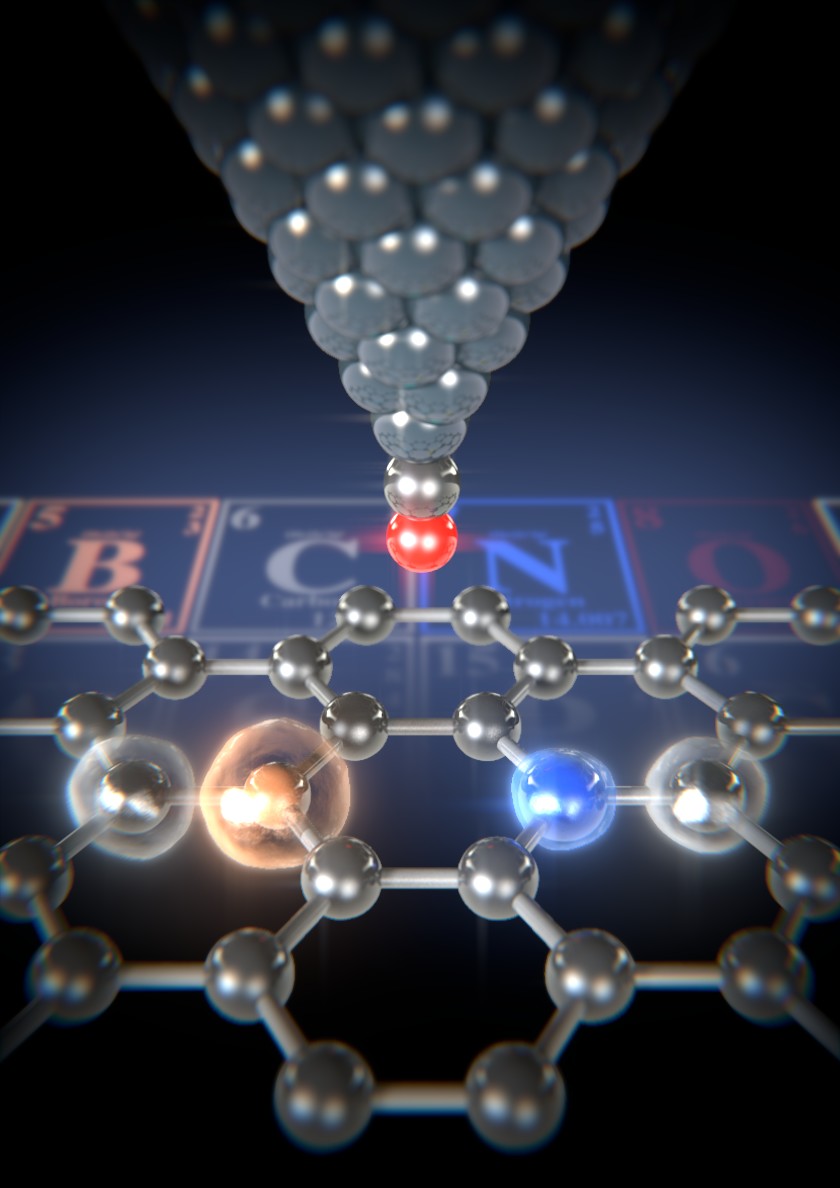
Early this year, Prof. Shigeki Kawai asked me to make a picture illustrating his new achievement. He, at NIMS (Japan), together with a team at Basel University, had succeeded at detecting single atom impurities in graphene ribbons.